
Unlocking Mumbai’s Redevelopment Potential: A Deep Dive into DCPR 33(7)A, 33(7)B, and the Transition Policy

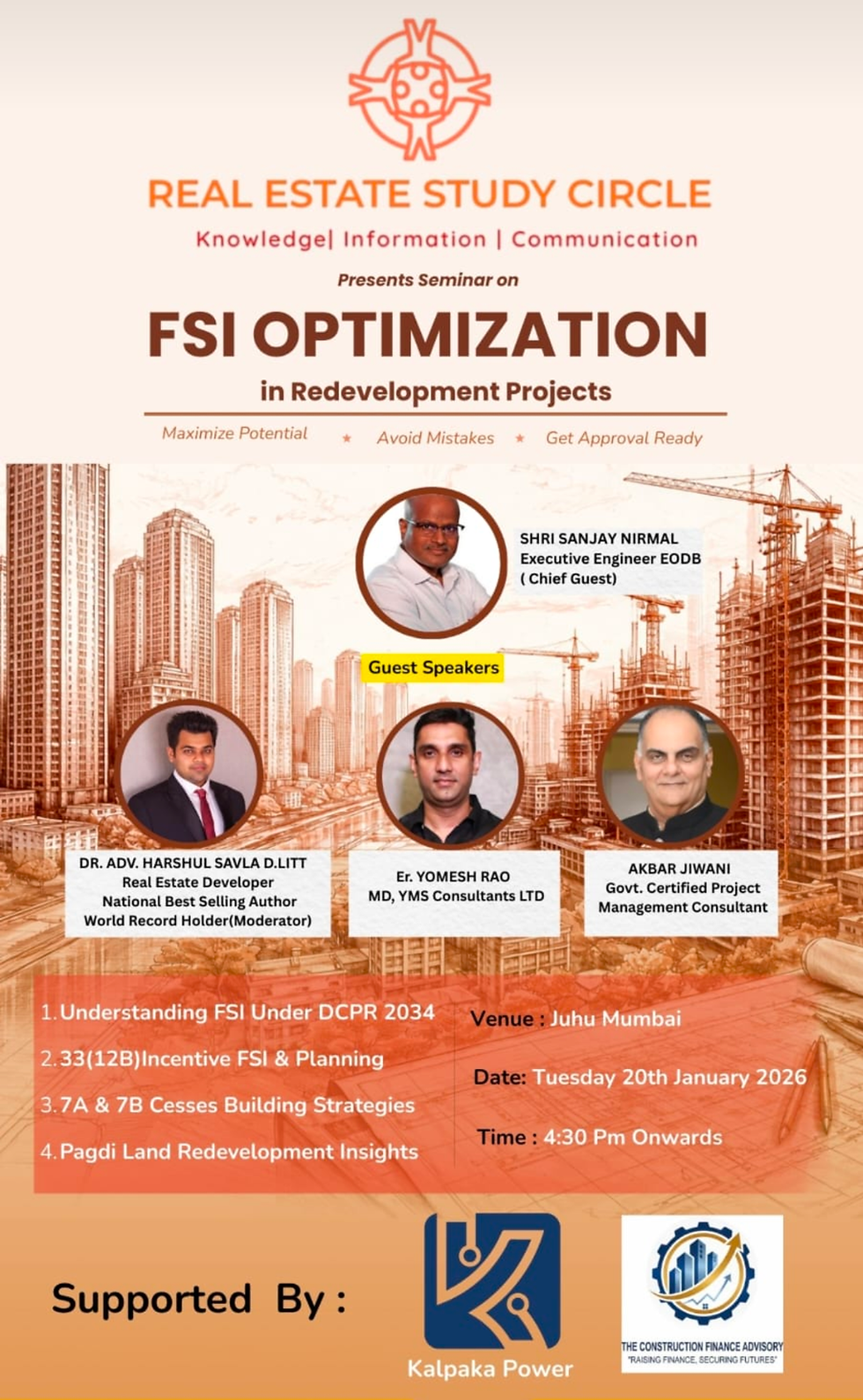
Navigating the landscape of Mumbai's Development Control and Promotion Regulations (DCPR 2034) can be a challenge. With recent clarifications and evolving policies, understanding how to maximize Floor Space Index (FSI) while ensuring project viability is more critical than ever.
Here is a breakdown of the key regulations shaping redevelopment in the Suburbs and beyond.
1. DCPR 33(7)A: Dilapidated Buildings in the Suburbs
This regulation focuses on the reconstruction of authorized, non-cessed, tenant-occupied buildings in the Suburbs and Extended Suburbs that have been declared unsafe or dilapidated
The Core Benefits:FSI Incentives:
You are eligible for FSI equal to the rehabilitation area of existing lawful tenants plus a 50% incentive FSI.
Bonus Space: Occupiers receive an additional 5% rehab carpet area.Premium Relief: Fungible compensatory area for the rehab component is granted free of premium.
Scale Advantages: For composite redevelopment of 6 or more plots, the incentive FSI increases to 70% with a 15% additional rehab carpet area.
The Challenges:Relocation Hurdles:
Managing tenant relocation and ensuring their rights are protected during the transition remains complex.Financial Feasibility:
Balancing high construction costs with tenant incentives is crucial for making these projects economically viable.
DCPR 33(7)B: Residential Housing SocietiesThis regulation applies to the redevelopment of private housing societies that are at least 30 years old, excluding those covered under 33(7) or 33(7)A.
Key Insights:Incentive BUA: Projects can receive an additional Built-Up Area (BUA) of 15% of the existing BUA or 10 sq. m per tenement, whichever is greater, without paying a premium
.Flexibility: If the incentive is insufficient, societies can purchase additional FSI through TDR or paid FSI.Eligibility: This is strictly for cases where existing members are re-accommodated on the same plot.
DCPR 33(12): Removing BottlenecksRegulation 33(12) deals with the removal and re-accommodation of contravening structures in Town Planning (TP) schemes or tolerated structures falling in road alignments.
High FSI: It allows for an FSI of up to 4.00 on the net plot.No Road Width Criteria: Unlike other regulations, 33(12) does not require a minimum road width of 12m; it can be implemented on plots with road widths as narrow as 6.0m.Saleable PAP Units:
A recent legal opinion (Feb 2024) clarifies that Project Affected Person (PAP) units under this scheme are not on par with slum tenants, meaning there are no restrictions on transferring these tenements before or after the grant of an Occupation Certificate.
The Legal Edge: Amalgamation amp; Transferability Recent legal opinions and UD clarifications (as of March 2024) have brought significant clarity:
Amalgamation: It is possible to amalgamate rehab and sale units, provided they are registered in a single name.No Transfer Restrictions: For 33(12) units, units can be sold or purchased freely, offering developers and investors more liquidity
Comments